- By Admin
- 21 Sep, 2026
- Corporate
Guide to Choosing Forklift Wheels and Material Handling Equipment
Forklifts and material handling equipment are essential for moving materials inside factories, warehouses, and distribution centers. The efficiency of this equipment depends heavily on the condition and specifications of its wheels, as wheels directly affect stability, movement, load capacity, and safety during material handling.
Therefore, when searching for forklift wheels in Saudi Arabia, you should not choose a wheel based on size alone. The type of forklift, load capacity, floor conditions, operating speed, working hours, and operating environment should all be considered.
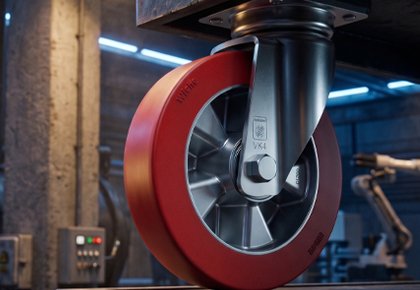
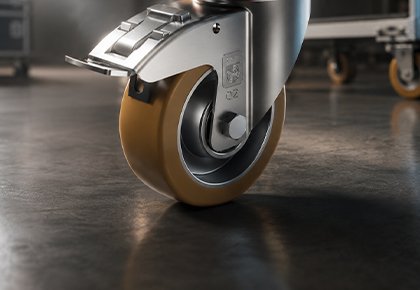
Material handling wheel manufacturers offer a variety of solutions for forklifts and industrial equipment, including drive wheels, load wheels, rollers, and specialized solutions for industrial vehicles.
What Is the Importance of Forklift Wheels?
Wheels are the point of contact between the forklift and the floor, which means they have a direct impact on movement and stability.
The right wheel can help:
- Improve traction.
- Support smooth forklift movement.
- Handle heavy loads.
- Reduce wear.
- Improve equipment stability.
- Reduce maintenance downtime.
- Protect floors when the appropriate wheel material is selected.
Using an unsuitable wheel, on the other hand, may result in faster wear, increased rolling resistance, or reduced traction.
Types of Forklift Wheels
Forklift wheels vary according to their position and function.
Drive Wheels
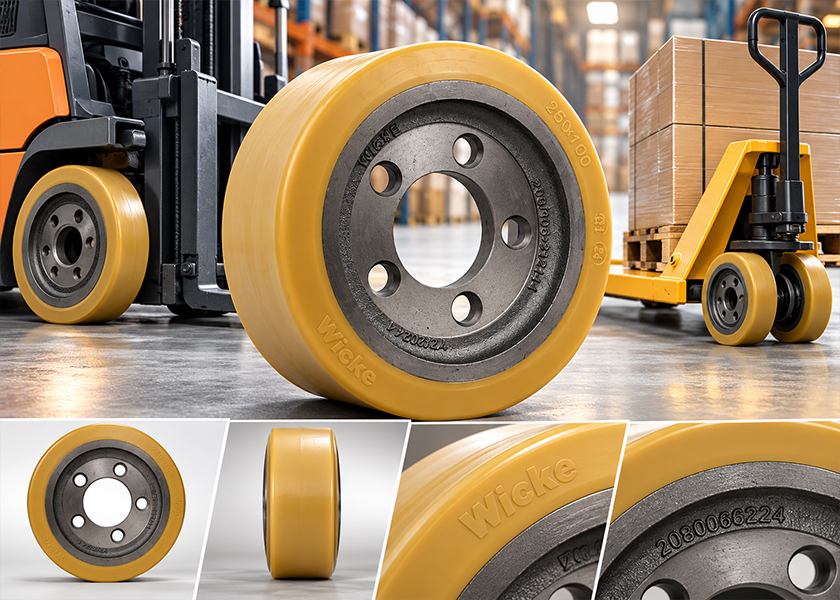
Drive wheels transfer power from the drive system to the floor, so they require suitable traction and load-bearing capabilities.
They are used in forklifts, material handling vehicles, AGVs, and other industrial equipment. Drive wheels must also provide sufficient traction for acceleration, braking, and steering, depending on the equipment design and operating conditions.
Load Wheels
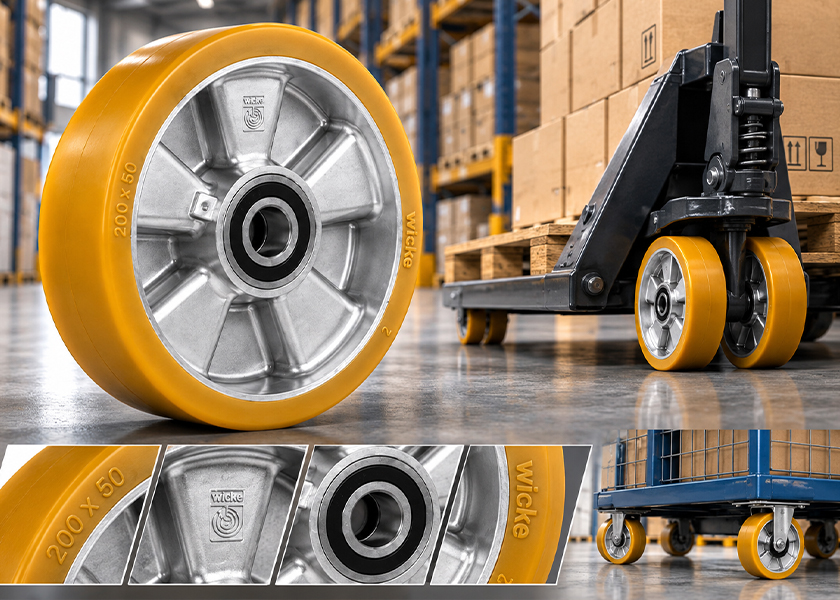
Load wheels are designed to support and move loads in material handling equipment, including certain pallet trucks and internal transportation systems.
Load wheels are commonly positioned under the forks or load end of electric warehouse equipment and are responsible for supporting the load while allowing smooth movement.
Rollers
Rollers are used in certain material handling equipment and systems that require load support and controlled movement.
The appropriate roller design depends on the equipment configuration, load requirements, floor conditions, and operating environment.
Forklift Wheels in Saudi Arabia: Key Selection Factors
When purchasing forklift wheels in Saudi Arabia, several important factors should be reviewed.
Load Capacity
You need to determine the maximum load the forklift is designed to handle.
It is not enough to consider the weight of the load alone. Load distribution, the center of gravity, the number of wheels, and the actual operating conditions should also be taken into account.
Floor Type
Does the forklift operate inside a warehouse?
Is the floor concrete?
Are there uneven surfaces?
Does the equipment operate outdoors?
The floor type has a direct impact on the appropriate wheel material and tread design.
Operating Hours
A forklift that operates for several hours every day requires wheels capable of handling continuous use.
As operating hours increase, wear resistance, heat management, and material quality become increasingly important.
Forklift Speed
Operating speed affects heat generation, wear, and friction. Therefore, the wheel or tire must be selected according to the speed and operating limits specified for the equipment.
Forklift Wheels in Saudi Arabia: How to Choose the Right Material?
Forklift and material handling wheels are available in several materials, each offering different characteristics.
Polyurethane
Polyurethane can provide good wear resistance and may be suitable for industrial floors where noise reduction and floor protection are important.
Different polyurethane compounds and hardness levels can offer different balances between traction, rolling resistance, wear resistance, and operating comfort.
Rubber
Rubber provides flexibility, cushioning, and traction for various applications.
It can be suitable when operating comfort, floor preservation, and traction are important considerations. However, the appropriate rubber compound should be selected according to the application and operating conditions.
Polyamide
Polyamide can be suitable for applications requiring a hard wheel with good load capacity and resistance to certain chemicals.
Polyamide wheels are used in various pallet truck and material handling applications, depending on the required load capacity, floor conditions, and operating environment.
Material Handling Wheels in Saudi Arabia
Material handling equipment is not limited to forklifts.
It includes:
- Pallet trucks.
- Stackers.
- Transport trolleys.
- AGVs.
- Warehouse carts.
- Load transportation equipment.
- Internal material handling systems.
Each type of equipment may require a different wheel design.
Therefore, when searching for material handling wheels in Saudi Arabia, the first step is to identify the exact type of equipment and its operating requirements.
Difference Between Drive Wheels and Load Wheels
One common mistake is treating all material handling wheels as the same product.
Drive Wheels
Their primary function is to transfer motor torque to the floor.
Therefore, traction, grip, heat management, and wear resistance can be particularly important when selecting drive wheels.
Load Wheels
Their primary function is to support and move loads.
Therefore, load capacity, wear resistance, rolling performance, and compatibility with the equipment are important factors.
Load wheels are different from drive tires and steering wheels and must match the specific equipment configuration.
How Does the Floor Affect Wheel Selection?
The floor is one of the most important factors when selecting forklift wheels.
Smooth Concrete Floors
Several wheel materials can be used, but the appropriate product should be selected based on load capacity, operating conditions, and required traction.
Sensitive Floors
Flexible rubber or polyurethane wheels may be suitable for applications where reducing the impact on the floor is important.
Uneven Floors
Equipment operating on uneven surfaces may require wheels with better shock absorption and suitable durability.
Outdoor Applications
Outdoor applications require wheels designed to handle dust, surface irregularities, and changing floor conditions.
Signs That Forklift Wheels Need to Be Replaced
There are several signs that should be monitored:
- Visible tread wear.
- Reduced traction.
- Vibration during movement.
- Increased operating noise.
- Cracks in the wheel.
- Changes in the wheel surface shape.
- Difficulty moving the equipment.
- Reduced stability.
- Uneven wear or flat spots.
Regular wheel inspection should be part of the equipment maintenance program. Debris, heat, and poor floor conditions can also contribute to premature wheel damage.
How Do You Choose the Right Wheel Size?
Wheel size should not be selected independently from the forklift or material handling equipment.
You should identify:
- Wheel diameter.
- Wheel width.
- Axle or bore size.
- Hub width.
- Bearing type.
- Load capacity.
- Operating speed.
- Forklift type.
The wheel must also be fully compatible with the equipment manufacturer's specifications. For load wheels, factors such as diameter, width, bore diameter, and bearing configuration are particularly important for proper fitment.
One Step for Industrial Wheels and Material Handling Equipment
One Step supplies industrial wheels and mobility solutions for different applications, including material handling and forklift equipment.
Material handling wheel solutions can include drive wheels, load wheels, rollers, and other wheel types designed for industrial transportation equipment.
When choosing forklift wheels in Saudi Arabia, it is important to provide the supplier with the forklift model, wheel dimensions, load requirements, operating environment, and application details. This information helps determine the appropriate wheel size and material for the equipment.
Frequently Asked Questions
What Are the Best Wheels for Forklifts?
There is no single wheel type suitable for every forklift. The right choice depends on load capacity, floor conditions, operating hours, speed, equipment type, and the required level of traction and durability.
What Is the Difference Between a Drive Wheel and a Load Wheel?
A drive wheel transfers power from the forklift's drive system to the floor, while a load wheel primarily supports and moves the load in material handling equipment.
Is Polyurethane Suitable for Forklifts?
Polyurethane can be used in many material handling applications, particularly where wear resistance and floor protection are important. The appropriate polyurethane compound should be selected according to the specific application.
How Do I Know When a Forklift Wheel Needs to Be Replaced?
A wheel should be inspected and potentially replaced when it shows severe wear, cracks, flat spots, reduced traction, excessive vibration, or other visible signs of damage.
Can the Same Wheel Be Used on All Forklifts?
No. Wheel sizes, materials, load capacities, and designs vary according to the forklift type, equipment configuration, load, floor conditions, and operating requirements.
Conclusion
Choosing forklift wheels in Saudi Arabia requires more than simply matching the wheel size. The forklift type, floor conditions, load capacity, operating hours, speed, and working environment should all be considered.
It is also important to distinguish between Drive Wheels and Load Wheels, as each serves a different function within material handling equipment.
By selecting material handling wheels in Saudi Arabia according to the actual equipment requirements, businesses can support smoother movement, reduce premature wear, and maintain the efficiency of forklifts and material handling systems in warehouses and factories.