- By Admin
- 21 Sep, 2026
- Corporate
TPE (Thermoplastic Elastomer) tires for food and beverage equipment and carts
Food and beverage equipment and carts require wheels that combine easy movement, flexibility, durability, and reliable performance in environments where high hygiene standards are essential.
TPE wheels are among the options used in certain industrial wheel applications. Thermoplastic Elastomer (TPE) combines flexibility with thermoplastic processing characteristics, while the actual performance of TPE wheels varies depending on their formulation and design.
When searching for TPE wheels in Saudi Arabia, the product should be selected according to actual operating conditions, including load capacity, floor type, temperature, moisture exposure, and equipment cleaning methods.
What Are TPE Wheels?
TPE stands for Thermoplastic Elastomer, a group of materials that combines elastic properties with the ability to be processed using thermoplastic methods.
TPE materials can provide a combination of flexibility and practical processing characteristics, but the performance of wheels made from TPE depends on the specific formulation and wheel design.
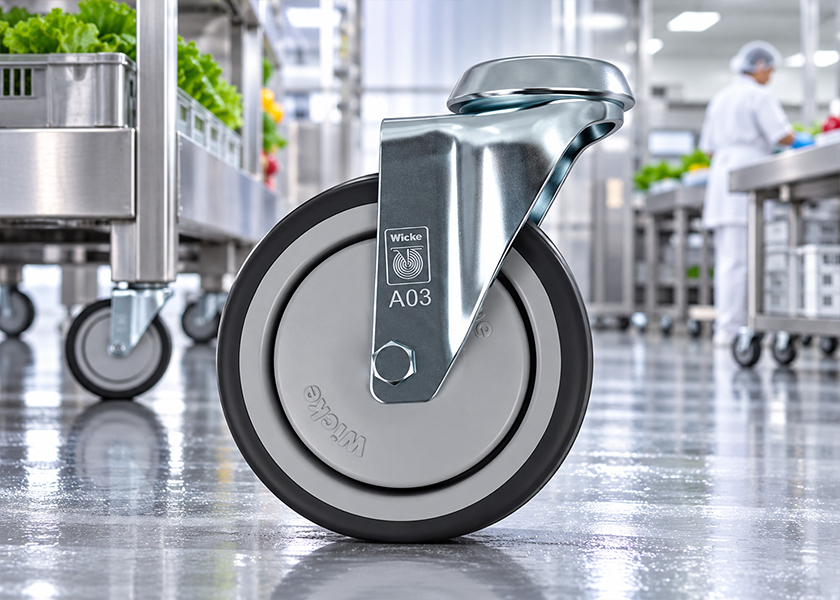
TPE is used in industrial wheels and casters to provide characteristics such as flexibility and quiet movement in certain applications. One Step offers TPE wheels for food and beverage applications with different diameters, load capacities, mounting types, and caster configurations.
Why Are TPE Wheels Used in Food Equipment?
Food and beverage carts and equipment often need to move frequently through production and storage areas.
TPE wheels can provide several useful characteristics for certain applications, including:
- Quieter movement.
- Suitable flexibility.
- Easy maneuverability.
- Non-marking options depending on the product.
- Compatibility with certain floor types.
- Different caster design options.
However, these characteristics should not be generalized to every TPE product, as performance depends on the material formulation, wheel design, and technical specifications.
TPE Wheels in Saudi Arabia: Where Can They Be Used?
TPE wheels can be used with various food and beverage equipment and carts, including:
- Food transportation carts.
- Restaurant and kitchen carts.
- Storage carts.
- Material handling equipment.
- Mobile worktables.
- Service carts.
- Certain production and packaging equipment.
- Internal product transportation carts.
The final application depends on the wheel specifications, load capacity, and operating environment.
Food Cart Wheels in Saudi Arabia: Choosing the Right Wheel
When choosing food cart wheels in Saudi Arabia, the cart's application should be considered first.
A lightweight cart used for short distances may have different wheel requirements from an industrial cart carrying heavy loads and operating throughout the day.
Important questions include:
- What is the weight of the cart?
- What is the maximum load?
- What type of floor will it operate on?
- Will the wheels be exposed to water?
- Is the cart cleaned daily?
- Does the cart need to move in all directions?
- Are brakes required?
- What is the operating temperature?
Answering these questions helps determine whether TPE or another wheel material is the most suitable option.
Thermoplastic Rubber Wheels in Saudi Arabia: Key Benefits
When searching for thermoplastic rubber wheels in Saudi Arabia, TPE can be considered as one option among several industrial wheel materials.
Quiet Movement
The flexible characteristics of some TPE formulations can help reduce noise generated by moving carts, which can be useful in kitchens, restaurants, and indoor environments.
Floor Protection
Certain TPE wheel designs can be suitable for floors where reducing marks or scratches is important, depending on the product specifications.
One Step describes its TPE wheels as providing excellent floor protection while supporting smooth and quiet movement.
Flexibility
TPE provides a degree of flexibility that can contribute to more comfortable movement compared with certain rigid wheel materials.
Easy Maintenance
Some TPE wheel designs are developed for applications where easy care and cleaning are important. However, the product specifications should always be reviewed before using a specific wheel in a particular food processing environment.
Are TPE Wheels Resistant to Water and Chemicals?
Not all TPE materials have the same level of chemical or water resistance.
Chemical resistance varies according to the TPE formulation, the chemical involved, its concentration, temperature, and exposure time.
Therefore, if a cart is regularly exposed to specific cleaning chemicals, those chemicals should be identified and the wheel manufacturer's compatibility information should be reviewed before selecting the product.
TPE vs. Traditional Rubber
The right choice depends on the application.
TPE
TPE may be suitable when flexibility, quiet movement, floor protection, and easy handling are among the priorities.
Elastic Rubber
Elastic rubber can provide good vibration absorption and comfortable movement across many applications.
Polyurethane
Polyurethane can be suitable for applications requiring high wear resistance and good load capacity, depending on the formulation and wheel design.
Polyamide
Polyamide is commonly used in applications requiring harder wheels and different load capacities.
Therefore, there is no single wheel material that is suitable for every food cart and food processing application.
Choosing the Right TPE Wheel Diameter
Wheel diameter affects ease of movement.
Larger wheels can help handle certain floor irregularities and may provide easier movement in specific conditions, while smaller diameters may be suitable for compact carts and applications requiring a lower overall equipment height.
The diameter should be selected according to:
- Cart weight.
- Load capacity.
- Floor type.
- Daily travel distance.
- Equipment height.
- Movement speed.
- Available space.
One Step's TPE Food & Beverage range includes wheel diameters such as 75, 100, 125, 160, and 200 mm, with different load capacities depending on the product.
Choosing the Right Load Capacity
The wheel should not be selected based only on the cart's empty weight.
The calculation should consider:
Cart Weight + Maximum Load + Operating Conditions
The result should then be compared with the specified load capacity of the wheel.
The number of wheels should also be considered because weight distribution may not always be equal during movement, especially when changing direction or traveling over uneven surfaces.
Does a Food Cart Need Brakes?
In many applications, brakes are useful when the cart needs to remain stationary during use.
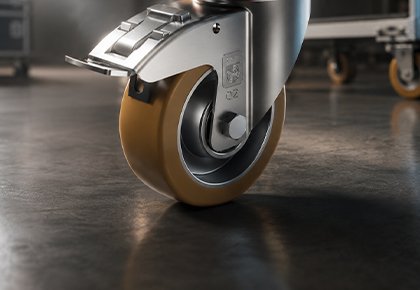
Swivel casters with brakes can be a suitable option when the cart needs both maneuverability and secure positioning.
However, the brake should not be selected separately from the rest of the caster. Its compatibility with the cart design, mounting method, and operating requirements should be confirmed.
One Step's TPE range includes swivel, fixed, and swivel-with-brake configurations, with both galvanized steel and stainless steel chassis options available.
When Should You Choose TPE and When Should You Choose Stainless Steel?
It is important to distinguish between the wheel tread material and the caster chassis material.
A caster can use a TPE wheel with a different chassis material, or it can combine a suitable wheel material with corrosion-resistant components.
In wet areas or environments requiring frequent cleaning, stainless steel can be an important option for caster components, while the wheel material should be selected according to the floor, load capacity, and operating conditions.
Stainless steel caster components are commonly considered for food and beverage environments where corrosion resistance and hygiene are important. One Step's Food & Beverage range includes TPE wheels with both stainless steel and galvanized steel chassis options.
One Step Mobility Solutions for Food Equipment
One Step provides industrial wheels and caster solutions for multiple sectors, including food and beverage applications.
Its Food & Beverage range includes Thermoplastic Elastomer TPE, Blue Elastic Rubber - Stainless Steel, Gray Elastic Rubber, and Polyamide solutions for different industrial applications.
When choosing TPE wheels in Saudi Arabia or another wheel type, the final application should be defined first, followed by the required diameter, load capacity, mounting type, caster configuration, and wheel material.
This approach helps identify a product that matches the actual operating conditions rather than relying on the wheel material name alone.
Frequently Asked Questions
What Does TPE Mean in Wheels?
TPE stands for Thermoplastic Elastomer. These materials combine elastic properties with thermoplastic processing characteristics and are used in certain industrial wheels and casters.
Are TPE Wheels Suitable for Food Carts?
Some TPE products can be used for food carts and equipment, but the product specifications must be checked to ensure compatibility with the intended application, cleaning conditions, load capacity, and operating environment.
What Is the Difference Between TPE and Traditional Rubber?
TPE belongs to a family of elastic materials that can be processed thermoplastically, while traditional rubber uses different material formulations and manufacturing processes. Actual performance depends on the specific material and application.
Are TPE Wheels Resistant to Chemicals?
Chemical resistance varies according to the TPE formulation, chemical type, concentration, temperature, and exposure time. The manufacturer's chemical resistance data should therefore be reviewed.
What Are the Best Food Cart Wheels in Saudi Arabia?
The appropriate wheel depends on the cart weight, load capacity, floor type, moisture exposure, cleaning requirements, and whether brakes are needed. The material alone should not determine the selection.
Can TPE Be Used with a Stainless Steel Chassis?
Yes, a caster can be designed with a TPE wheel and corrosion-resistant metal components. However, the complete caster should be selected according to the equipment's engineering specifications and operating conditions.
Conclusion
TPE wheels are an important option among the mobility solutions used for certain food and beverage equipment and carts, particularly where flexibility, quiet movement, and floor protection are important considerations.
When searching for TPE wheels in Saudi Arabia, load capacity, wheel diameter, floor type, moisture exposure, cleaning chemicals, and operating temperature should all be evaluated before making a purchasing decision.
Choosing food cart wheels in Saudi Arabia should not depend on wheel material alone. The complete caster system must be compatible with the cart design and the actual operating environment to achieve reliable and efficient performance.