- By Admin
- 21 Sep, 2026
- Corporate
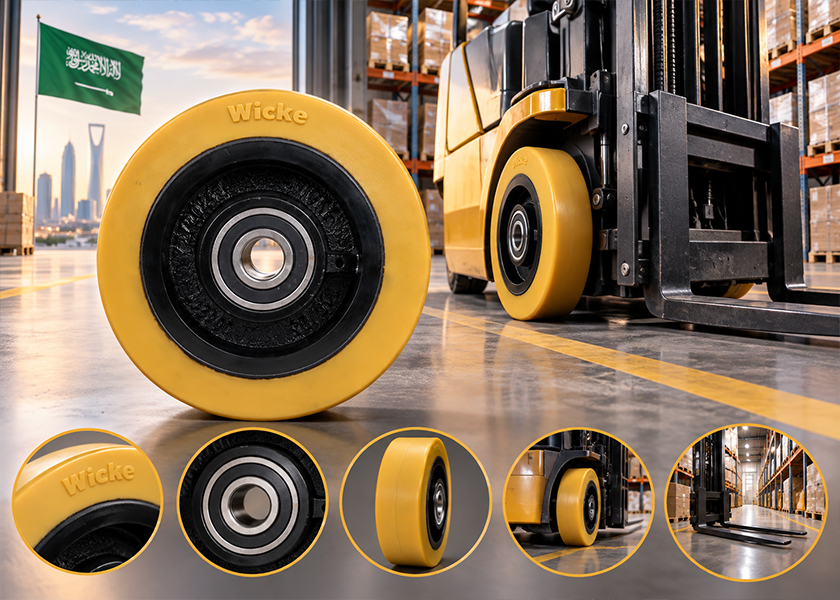
Forklift Drive Wheels: High Performance for Saudi Warehouses
Forklifts operating in warehouses and factories require drive wheels that provide suitable traction, stability, and durability. Wheel performance directly affects the forklift's ability to move and transport loads safely.
Drive Wheels are among the most important components of a forklift because they transfer the power generated by the drive system to the floor and help move the equipment.
Manufacturers of material handling wheels offer drive wheel solutions for forklifts, AGVs, industrial transport equipment, and other material handling applications, with different materials and designs depending on the application.
When searching for drive wheels in Saudi Arabia, it is important to consider traction, load capacity, wear resistance, operating speed, floor conditions, and the working environment.
What Are Drive Wheels?
Drive wheels are the wheels that transfer motor torque to the floor.
Simply put, they provide the contact point that converts the power generated by the drive system into actual movement.
They differ from Load Wheels, which are primarily used to support loads in material handling equipment.
Drive wheels are commonly used in forklifts, material handling equipment, AGVs, and other industrial applications.
Why Are Drive Wheels Important for Forklifts?
A forklift needs sufficient traction to:
- Move while carrying a load.
- Stop in a controlled manner.
- Change direction.
- Operate on inclines where permitted.
- Move through warehouse aisles.
- Transport loads repeatedly throughout the working day.
If a wheel is worn or unsuitable for the floor, traction may decrease and movement-related problems may increase.
Therefore, selecting the right forklift wheels in Saudi Arabia is an important technical consideration when equipping or maintaining a material handling fleet.
Drive Wheels in Saudi Arabia: Key Selection Factors
1. Traction
Traction is one of the most important characteristics of a drive wheel.
Forklifts require sufficient grip on the floor, particularly when transporting heavy loads.
Drive wheel selection involves balancing traction with factors such as wear, heat generation, and floor conditions. For example, warehouse drive wheels may operate on smooth floors where moisture or dust can reduce traction, while abrasive floors can increase wear.
2. Load Capacity
As the load increases, the demands placed on the wheel also increase.
The wheel should be selected according to the actual weight of the equipment, the load, and how the load is distributed during operation.
3. Floor Conditions
Wheel selection can vary depending on whether the forklift operates on:
- Smooth warehouse floors.
- Concrete floors.
- Industrial floors.
- Outdoor surfaces.
- Uneven surfaces.
Floor conditions can affect traction, wear, rolling resistance, and overall wheel life.
4. Operating Speed
Forklift speed affects heat generation and wear, so the wheel must be suitable for the required operating speed.
The appropriate speed rating should always be verified against the wheel and equipment manufacturer's specifications.
Drive Wheel Materials in Saudi Arabia
The appropriate wheel material depends on the application and operating conditions.
Rubber
Rubber provides flexibility and can offer good traction and shock absorption in various applications.
Rubber drive wheels can also provide a smoother ride and good traction across different floor types, although softer compounds can generate more heat during continuous operation.
Polyurethane
Polyurethane offers good wear resistance and can be suitable for industrial floors and applications requiring long service life.
Different polyurethane compounds and hardness levels can be selected to balance traction, rolling resistance, wear resistance, and heat performance.
High-Performance Materials
Specialized materials are also available for demanding applications, including high-performance polyurethane compounds and specialized rubber formulations.
The appropriate material should be selected according to the load, speed, floor conditions, operating hours, and traction requirements rather than material type alone.
Forklift Wheels in Saudi Arabia: How Do You Choose the Right Size?
Wheel size must match the forklift manufacturer's specifications.
The key information includes:
- Wheel diameter.
- Wheel width.
- Axle or bore size.
- Mounting configuration.
- Bearing type.
- Load capacity.
- Operating speed.
- Floor type.
- Forklift type.
A replacement wheel should not be selected simply because it has the same diameter. Width, hub design, axle compatibility, material, and load capacity can all differ between products.
Drive Wheels in Saudi Arabia for Warehouses
Forklifts operate under different conditions across warehouses.
In indoor warehouses, floors are generally more uniform, but traffic intensity can be high.
This makes wear resistance, traction, heat management, and service life important factors when selecting drive wheels in Saudi Arabia.
For warehouses that include outdoor areas or uneven surfaces, the wheel material and tread design should be selected according to the actual floor conditions.
The Effect of Load on Drive Wheels
As the weight of the load increases, greater forces are placed on the wheel system.
Therefore, it is important to consider:
Forklift weight + load weight + operating conditions
This information should then be compared with the wheel's rated capacity specified by the manufacturer.
The load may also change during lifting and transportation. For this reason, wheel selection should consider the maximum expected operating conditions rather than an average load alone.
When Should Forklift Drive Wheels Be Replaced?
There are several signs that indicate a drive wheel should be inspected:
Reduced Traction
If the forklift begins to slip or loses grip during movement, the wheel should be inspected.
Excessive Wear
Severe wear can change the shape of the wheel's contact surface and affect performance.
Cracks
Any visible cracks or significant damage should be evaluated promptly.
Vibration
Unusual vibration during movement may indicate a problem with the wheel, axle, bearings, or another component.
Reduced Wheel Diameter
Continuous wear reduces the wheel diameter and may affect forklift performance, ground clearance, and overall stability.
How Can You Extend the Life of Drive Wheels?
Wheel wear can be reduced by:
- Staying within the recommended load capacity.
- Avoiding inappropriate operating speeds.
- Checking tire pressure when applicable to the wheel type.
- Inspecting the wheel surface regularly.
- Keeping warehouse floors clean.
- Removing obstacles from forklift travel paths.
- Inspecting axles and bearings.
- Training operators on proper equipment operation.
- Selecting the correct wheel from the beginning.
Wheel selection should take into account the application, floor conditions, torque, speed, load, and required performance. Heat, debris, and poor floor conditions can also accelerate wheel wear and damage.
One Step and Forklift Wheels
One Step provides industrial wheel and mobility solutions for different sectors, including material handling and forklift applications.
For factories and warehouses searching for drive wheels in Saudi Arabia, providing the supplier with the forklift specifications and operating conditions can help identify a suitable wheel instead of relying on diameter alone.
The correct wheel should match the equipment in terms of dimensions, load capacity, mounting configuration, material, speed, and operating environment.
Frequently Asked Questions
What Is the Function of a Drive Wheel on a Forklift?
A drive wheel transfers motor torque to the floor, providing the traction and movement required to operate the forklift.
What Is the Difference Between a Drive Wheel and a Load Wheel?
A Drive Wheel transfers the power generated by the drive system to the floor, while a Load Wheel primarily supports loads and facilitates movement in material handling equipment.
What Is the Best Material for Drive Wheels?
There is no single material suitable for every application. Rubber, polyurethane, and other specialized materials can be used depending on floor conditions, load, speed, operating hours, traction requirements, and the equipment type.
When Should Drive Wheels Be Replaced?
Drive wheels should be inspected and potentially replaced when they show severe wear, cracks, reduced traction, unusual vibration, or significant changes in their shape or diameter.
Can a Different Type of Drive Wheel Be Used?
A replacement can only be used if it is compatible with the forklift's specifications, including dimensions, axle or hub configuration, load capacity, speed, material, and design.
Are Drive Wheels Suitable for Warehouses?
Yes. Drive wheels are essential components of forklifts and material handling equipment used in warehouses, distribution centers, and industrial facilities. The specific wheel should be selected according to the warehouse floor, operating conditions, load, and equipment requirements.
Conclusion
Drive wheels in Saudi Arabia are an essential part of forklift performance because they transfer power to the floor and provide the traction required for controlled movement.
When selecting forklift wheels in Saudi Arabia, factors such as load capacity, floor conditions, operating speed, working hours, and equipment type should all be considered.
As for forklift drive wheels in Saudi Arabia, they should be selected according to the forklift specifications and warehouse operating conditions. Regular inspection and maintenance are also important for maintaining performance, reducing premature wear, and minimizing unplanned equipment downtime.