- By Admin
- 21 Sep, 2026
- Corporate
Antibacterial Polyamide Wheels and Casters for Food Factories
Food and beverage factories need to carefully select their mobility equipment because the wheels and casters used in production and storage areas are exposed to different operating conditions, including moisture, frequent cleaning, heavy loads, and continuous movement.
Polyamide wheels are widely used in industrial applications because of their hardness, wear resistance, and resistance to certain chemicals. Different types of polyamide are available for material handling and industrial applications, with performance varying according to the material formulation and wheel design.
When searching for polyamide wheels in Saudi Arabia for use in food factories, the material alone should not be the only consideration. Hygiene requirements, load capacity, floor type, temperature, and cleaning procedures should also be evaluated.
What Are Polyamide Wheels?
Polyamide is an engineering material used to manufacture a wide range of industrial wheels and casters.
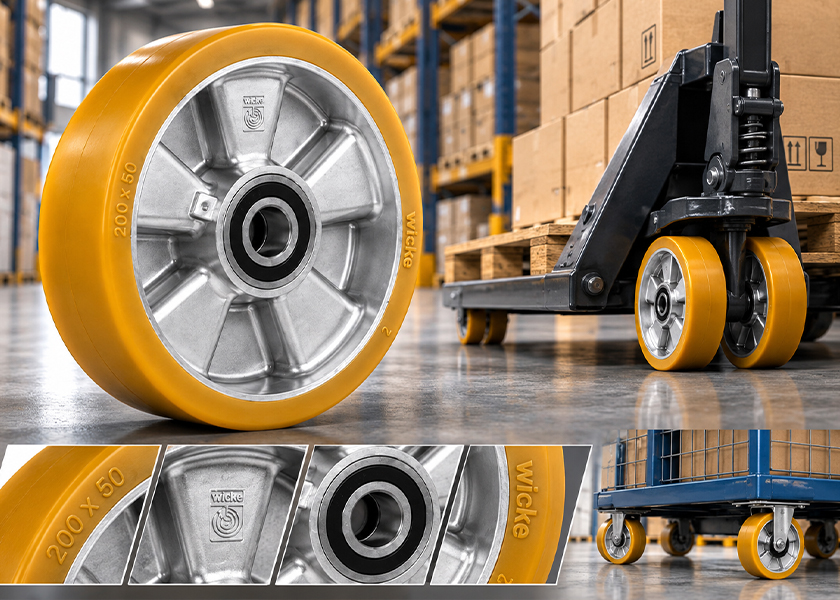
One of the most common types is Polyamide PA 6, which is known for its hardness, wear resistance, and resistance to certain chemical influences in many applications. WICKE, for example, offers Polyamide PA 6 wheels for different load and material handling applications. Some WICKE PA 6 products are specified for temperature ranges from -40°C to +90°C, depending on the wheel and configuration.
These wheels are used in:
- Factories.
- Warehouses.
- Logistics centers.
- Material handling equipment.
- Transport carts.
- Certain food and pharmaceutical applications.
- Storage carts and equipment.
Why Are Polyamide Wheels Used in Food Factories?
Wheel selection inside a food factory depends on the specific application. In some areas, the need for a hard wheel that can support heavy loads and resist wear may be more important than the need for a flexible wheel.
Polyamide wheels can therefore be suitable for certain material handling applications, particularly on smooth floors.
Some of the characteristics that make polyamide popular for industrial wheels include:
Wear Resistance
Polyamide wheels can provide good wear resistance in suitable applications, helping maintain performance during frequent use.
Resistance to Certain Chemicals
Some grades of polyamide offer resistance to certain chemicals, which can be an important consideration in industrial environments where cleaning agents or different materials are present.
High Load Capacity
Polyamide wheels are available in different designs and load capacities, ranging from lighter applications to heavy-duty industrial solutions. WICKE's Plastic product range, for example, includes polyamide wheels with load capacities extending into the thousands of kilograms for certain heavy-duty designs.
Are Polyamide Wheels Antibacterial?
It is important to distinguish between antibacterial properties and characteristics related to hygiene and ease of cleaning.
Not every wheel made from Polyamide is automatically antibacterial. Therefore, the term "antibacterial" should only be used for a product when this property is specifically confirmed by the manufacturer's specifications or by a documented treatment of the material.
In food environments, attention should be given to hygienic design, ease of cleaning, corrosion resistance, and avoiding areas that are difficult to clean.
Specialized food-industry wheel solutions may also offer additional features, but these are product-specific characteristics and should not be considered general properties of all Polyamide wheels.
Polyamide Wheels in Saudi Arabia: How to Choose the Right Product
When searching for polyamide wheels in Saudi Arabia, several specifications should be identified.
1. Load Capacity
Start by determining the weight of the cart or equipment and its maximum load.
Then determine the number of wheels required and calculate the appropriate load capacity for each wheel.
2. Floor Type
Polyamide can be particularly suitable for certain smooth floors. However, comfort and operating noise may differ compared with rubber or polyurethane wheels.
The appropriate wheel material should therefore be selected according to the floor type and application.
3. Temperature
The product's specified temperature range should be reviewed, especially in food factories that contain refrigerated or freezing areas.
For example, WICKE specifies a temperature range of -40°C to +90°C for certain Polyamide PA 6 wheels. The applicable range can vary by product.
4. Moisture and Cleaning
If the wheel is regularly exposed to water and washing processes, all caster components should be evaluated rather than the wheel alone.
In these environments, selecting a corrosion-resistant caster chassis can be important alongside choosing the appropriate wheel material.
Industrial Plastic Wheels in Saudi Arabia for Material Handling
The term industrial plastic wheels in Saudi Arabia can refer to different wheels manufactured from engineering plastics, including polyamide.
However, not all plastic wheels are the same.
They can differ in:
- Material type.
- Hardness.
- Load capacity.
- Wheel diameter.
- Bearing type.
- Temperature resistance.
- Chemical resistance.
- Caster design.
Therefore, the product should be selected based on its technical specifications rather than the general term "plastic."
Is Polyamide Suitable for Food Factory Floors?
Polyamide can be suitable for certain smooth floors in food factories, particularly where a hard wheel with good load capacity is required.
However, if the floor is sensitive or the application requires lower noise and vibration, flexible materials such as rubber or polyurethane may be more suitable in certain applications.
Therefore, wheel material selection should be based on the floor and operating conditions rather than the type of facility alone.
The Importance of Stainless Steel with Polyamide Wheels
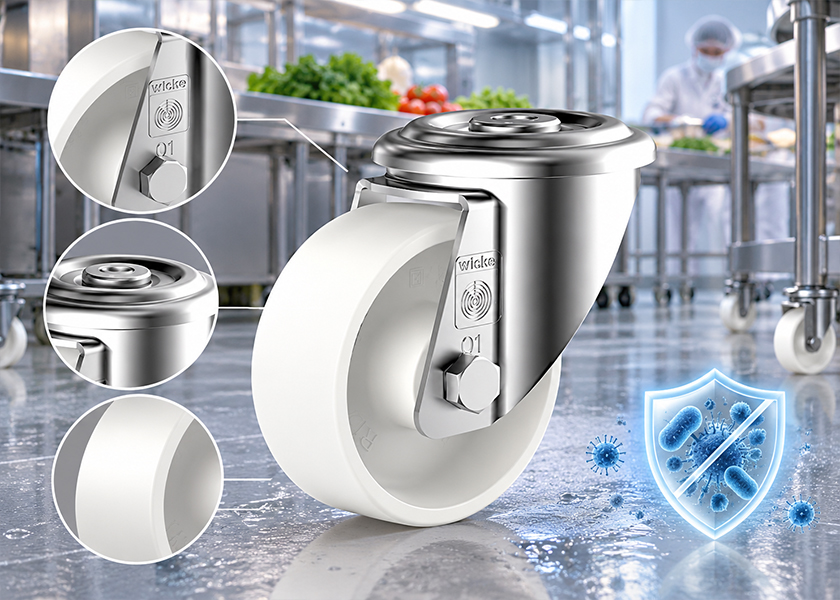
In wet environments, it can be beneficial to use a stainless steel caster chassis with a Polyamide wheel.
WICKE's INOX range includes Polyamide PA 6 wheels combined with stainless steel forks and components for applications requiring corrosion resistance. Certain products use stainless steel bearings and axles as well.
This demonstrates why wheel selection should not be considered separately from the caster chassis, bearings, axle, and other components.
One Step Industrial Wheel Solutions
One Step provides industrial wheels and caster solutions for multiple sectors, including food and beverage, material handling, and forklift applications.
When searching for antibacterial wheels in Saudi Arabia or wheels suitable for food-industry environments, the technical requirements should be identified first. Any specific hygienic or antibacterial property should then be confirmed through the actual product specifications.
This approach helps ensure that the selected wheel matches the operating environment rather than relying on a general material description.
Frequently Asked Questions
Are Polyamide Wheels Suitable for Food Factories?
They can be used in certain food factory and material handling applications, particularly on suitable floors, provided that the product is selected according to load capacity, cleaning conditions, temperature, and operating requirements.
Are All Polyamide Wheels Antibacterial?
No. Polyamide as a material does not automatically mean that a wheel is antibacterial. Any antibacterial property should be specifically stated and supported by the product specifications.
What Are the Benefits of Industrial Plastic Wheels?
Depending on the material and design, industrial plastic wheels can provide hardness, wear resistance, and good load capacity, with different types available for various industrial applications.
Can Polyamide Wheels Be Used with Stainless Steel?
Yes. There are wheel and caster solutions combining Polyamide wheels with stainless steel forks or other stainless steel components for applications requiring corrosion resistance and hygiene considerations.
Are Polyamide Wheels Suitable for Warehouses?
Yes. Polyamide wheels are used in many warehouse and material handling applications, particularly where the floor is suitable and wear resistance and load capacity are important considerations.
Conclusion
Polyamide wheels provide a practical solution for many material handling and industrial applications and can be used in certain food factory environments when the wheel and caster components are appropriately selected.
When searching for polyamide wheels in Saudi Arabia, load capacity, floor type, temperature, moisture exposure, cleaning requirements, bearing type, and caster construction should all be reviewed.
The term antibacterial wheels in Saudi Arabia should be treated as a specific product specification rather than an automatic characteristic of every Polyamide wheel. For food-industry applications, the complete caster system should be evaluated to ensure that its materials and design are suitable for the intended operating environment.